
Build a Bailey's Crossroads Street Trail
Every street lookup is a chain of record roles. Start with the Master Address Repository. Fairfax County calls it MAR, and it establishes a recognized Bailey's Crossroads site address with its status. The county assessment record then ties that address to a parcel. Recorded land records can name a conveyance and its parties. Dated directories and election material add civic address clues. No single layer proves who lives there now. Keep each source and date beside its fact, so a postal or tax mailing address never gets mistaken for a resident.
- Normalize each Bailey's Crossroads address into number, any suffix, street name, street type, unit, mailing city, state, and ZIP.
- Search Fairfax MAR for the Bailey's Crossroads number and street, then note the address status, jurisdiction, ZIP, and parcel PIN when shown.
- Open the linked Bailey's Crossroads parcel through iCare and record the owner display, mailing address, tax year, subdivision, zoning, and deed references without treating any one field as occupancy.
- Use Jade and Fairfax GIS to inspect the Bailey's Crossroads parcel boundary and nearby PINs. Open each neighboring parcel separately.
- Follow the grantor and grantee trail through the clerk's land-record route, then use dated Bailey's Crossroads directories or lawful voter material only as a time-stamped clue.
To cover a whole named street in Bailey's Crossroads, repeat the same steps one number at a time. An address-by-address log beats a guessed roster. Guesswork ties people to a road without support.
Bailey's Crossroads MAR Address Fields
MAR remains Fairfax County's authoritative source for current Bailey's Crossroads addressing. It is not a people directory. Filters cover address number, street name and type, city, ZIP, parcel ID, subdivision, and created or expired dates. Keep the unit and street suffix when they belong to the input. A failed search has easy fixes. Drop the suffix first. Or try the full word and the abbreviation in turn for the street type. That trick helps most where older material spells the address differently. MAR also carries effective, change, and expiration dates.
Those fields explain why a current street number misses an older map or directory. MAR defines a site and its jurisdiction. A deed's legal description still controls the land itself. So a Bailey's Crossroads record with a Falls Church mailing label does not settle the Fairfax-versus-city question by itself.
| MAR filter | Use in a Bailey's Crossroads street search |
|---|---|
| Address number and street name/type | Find the recognized site while preserving spelling and street-type variants. |
| Unit and ZIP | Separate units and compare delivery geography with the address record. |
| Parcel ID and subdivision | Bridge the address to a PIN, map context, and subdivision fields. |
| Created or expired date | Check whether an older label or number needs historical reconciliation. |
Note: Keep the spelling, status date, and jurisdiction with each MAR result so later deed or directory comparisons remain traceable.
Bailey's Crossroads Street Parcels in iCare
Fairfax's Department of Tax Administration owns Bailey's Crossroads property data, and iCare is its public assessment entry point. The basic address form searches a property record, not a resident roll. Results can include an owner display, mailing address, parcel PIN, assessment, land-use detail, subdivision, planning area, supervisor district, structure data, and deed references. iCare web data refreshes twice weekly. The county says owner names may be withheld from web display.
The address form has clear fields and controls. Use each field only for what the form supports. Its help text says omitting a suffix can broaden a search. Wildcard tips are supported for street searching too. Match the query to the tool's purpose.
| iCare field | Type | Required | Street-search use |
|---|---|---|---|
| Number | Text | No | Enter the street number; omit a suffix if results fail. |
| Unit# | Text | No | Distinguish an apartment or other unit identifier. |
| Street | Text | No | Use the street name; partial and wildcard tips are available. |
| Suffix | Text or selection | No | Broaden the search by leaving it out when necessary. |
| Sort by | Select | No | Set the result order using the current live options. |
| Results per page | Select | No | Adjust result-page size using the current live control. |
The iCare report shows a property, not a person. A tax mailing recipient can live elsewhere. A commercial parcel's business owner or structure data says nothing about who occupies the address today.
Deeds Along Bailey's Crossroads Streets
A street directory turns into a land-record trail once the PIN and legal description are in hand. That's where Bailey's Crossroads deeds take over. Fairfax's historic-property guidance starts with the grantee index. Look for the buyer's deed book, page, and date. Then follow references to the same parcel. Acreage, boundaries, plats, buildings, married names, and adjoining owners all appear along the way. The grantor index shows the seller's first acquisition. This method carries parcel identity across changed street labels far better than a street name alone.
Fairfax Circuit land-record research covers records from 1742 to the present. CPAN is the subscriber route online. The clerk's free public research-room terminals offer a separate in-person route. Copies come by mail or in person once an instrument or book and page is known. Certified copies cost $2 per document plus $0.50 per page. Personal checks are not accepted. Mailed requests take about two weeks.
The CPAN land-record landing page displays the online service leading to Fairfax clerk categories relevant to Bailey's Crossroads. The landing page itself is not a deed search. It only marks the entrance. Preserve the instrument number, book and page, grantor, grantee, and recording date when requesting a copy.
Verify the recorded document with the clerk's source. Then keep the record date, since a conveyance alone never proves an unbroken street presence in Bailey's Crossroads.
Note: A deed records a land transaction and its parties; it does not by itself establish every person who lived at the address.
Bailey's Crossroads Street Record Coverage
Address-keyed systems in Bailey's Crossroads each answer a different question. Begin with the county's current address and parcel sources. The clerk of court holds recorded instruments. Library and archive collections carry the older street clues. Election records for Bailey's Crossroads operate under their own authorization and purpose rules, so they sit outside a simple address search. The table below keeps these evidence types separate. That separation matters most when a single street shows up under more than one ZIP, mailing city, or public geography.
| Address record | Fairfax keeper | Street-level evidence | Access route |
|---|---|---|---|
| MAR address feature | GIS and Mapping Services | Recognized site, unit, ZIP, jurisdiction, PIN, status dates | Free MAR viewer and GIS contacts |
| Assessment parcel | Department of Tax Administration | Owner display, mailing address, assessment, land use, deed references | Free iCare search; DTA for defined account detail |
| Parcel map and imagery | Fairfax GIS | Boundaries, adjacent PINs, historic imagery, tax-map context | Jade, Digital Map Viewer, and in-person GIS access |
| Recorded instrument | Circuit Court Clerk | Conveyance parties, recording data, legal land description | CPAN, public terminal, copy request, HRC or LVA for older material |
| Election record | Fairfax Elections and Virginia Elections | Authorized registration or historical civic clue | Certified self lookup, authorized list process, or custodian request |
Virginia's Freedom of Information Act covers a defined county-held record. An office may not have posted the record yet. A request must describe the record with reasonable specificity to the custodian. The office owes no duty to build a new street roster for you. The usual response window runs five work days. The custodian can give timely notice of up to seven more work days. Costs and a possible deposit may apply in the circumstances the statute describes.
Bailey's Crossroads Street Geographies
A single Bailey's Crossroads address can carry several labels at once. One home may sit in a Census-designated place. It can fall inside Fairfax County jurisdiction and still use a Falls Church mailing city. Add a ZIP code, a precinct, Mason District, or a planning area, and the same parcel wears many names. None of these labels mean the same thing. A street directory lookup has to sort them out. The core mailing ZIP is 22041, while 22044 shows up in nearby shared-corridor records. ZIP 22042 can also surface in Seven Corners or Annandale-area records. Always enter the exact address in MAR and iCare. Do this before picking a county custodian for any resident lookup.
Precinct 501 BAILEYS stretches from the Columbia Pike and Semery Road area toward the City of Alexandria boundary and Holmes Run. Its boundaries have shifted over time. That is why election geography must be dated. Confirm it on the current Fairfax precinct map. No ZIP, postal city, or neighborhood name can assign a parcel to a precinct or an independent city.
- Parcel
- A tax-mapped piece of land identified in Fairfax records by a PIN or tax-map reference.
- Situs address
- The physical property location used to identify the site, distinct from a tax mailing address.
- Plat
- A recorded map that can show lots, boundaries, and subdivision layout.
- Criss-cross directory
- A reverse directory arranged by address, useful as a dated published clue rather than a current official roll.
Note: Record the jurisdiction, ZIP, precinct, and mailing city separately because each one answers a different geographic question about the same street.
Bailey's Crossroads Street History Layers
Maps and assessments in Bailey's Crossroads run on separate clocks. iCare refreshes its web data twice weekly. History moves far more slowly. Fairfax's Historical Imagery Viewer reaches back to 1937. The Digital Map Viewer adds annual property map books starting in 1960. Those books hold 444 tax-map tiles as PDFs. A dated aerial or tile can show when a Bailey's Crossroads parcel layout, road alignment, or structure came into being. It cannot tell you who lived there.
For deeper parcel context, turn to the Fairfax GIS hub. It hosts Jade, the county's detailed property reporting tool. It also offers historical imagery, save, share, and print functions, and more than 170 map layers. Easements count as official only in the land records. The county also warns that parcel boundaries can vary in accuracy. So treat mapped lines as a starting point rather than proof.
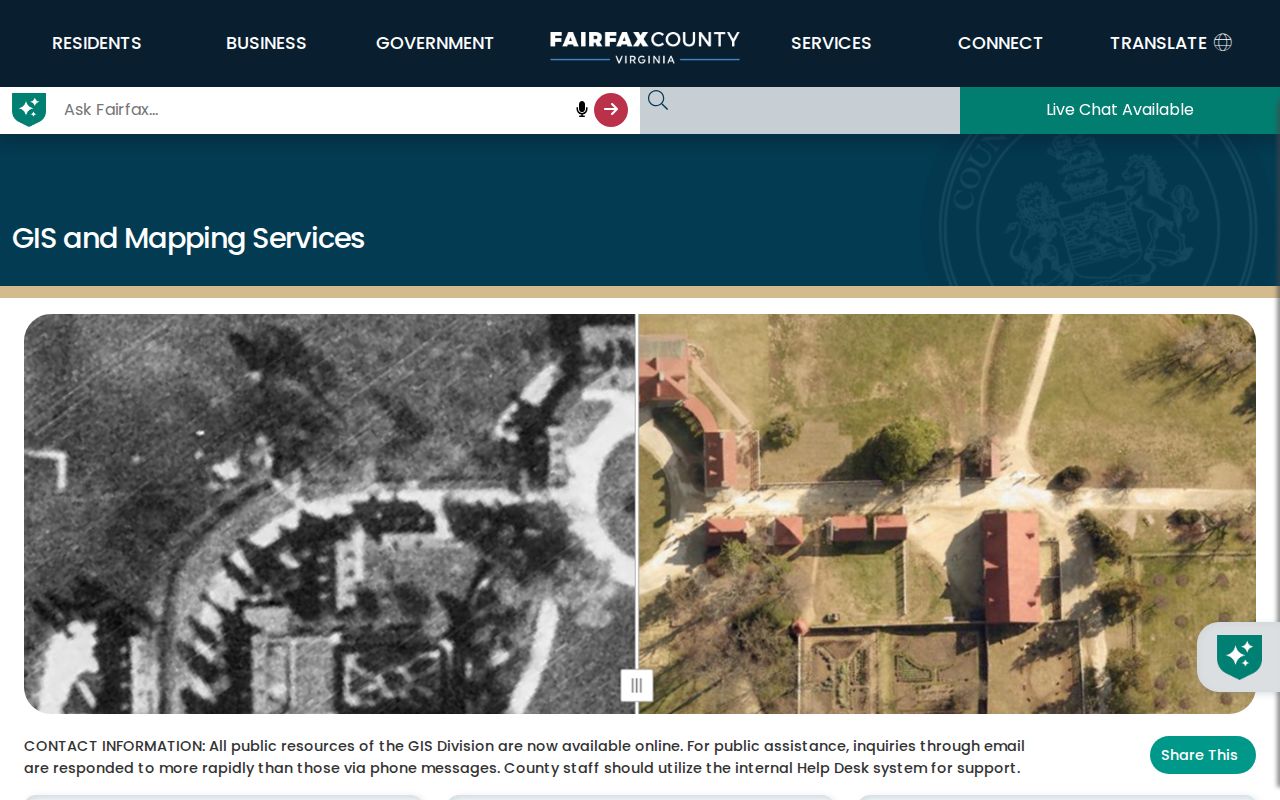
Never describe a change along a Bailey's Crossroads street on a map date alone. Anchor the claim to a deed, a plat, or a dated directory citation. No official Bailey's Crossroads-only renumbering schedule exists. For each specific address, work through MAR history, tax-map books, plats, and clerk records instead.
Bailey's Crossroads Street Name Checks
A familiar street label is not enough to join a present parcel to an older street directory entry. Compare the components instead. MAR exposes street number, number suffix, prefix, street name, street type, street suffix, full name, unit type, unit number, and address-status dates. Search the full spelling and the abbreviation. Then keep the effective, change, and expiration dates alongside whatever result you get. A current number can mislead badly as a historical key. Addresses get changed, expired, replatted, or recorded under a different postal label.
No official Bailey's Crossroads-only renumbering schedule exists either. That gap is a reason to verify the exact parcel with a PIN, legal description, plat, tax-map book, and recorded instrument before calling two similar addresses the same place. When quoting maps and directories, record the original street wording. Silent conversion to a modern label erases the very evidence you need.
Dated Bailey's Crossroads Street Entries
An older address clue usually leads to the Fairfax County Public Library Virginia Room. That room is the practical bridge between maps and printed material. Its collections hold city and telephone directories. They also hold maps, newspapers, yearbooks, local-history books, manuscripts, and a CPAN station. Ask for reverse or criss-cross material by year and jurisdiction. Request telephone, city, suburban, newspaper, map, yearbook, and vertical-file material the same way. A Bailey's Crossroads street may hide under Falls Church or Fairfax County. It may also hide under Alexandria, Washington suburbs, or a telephone exchange.
Describe every volume you use precisely. Record the publisher, edition year, street spelling, household entry, page image, and call number. The official holdings do not amount to an uninterrupted local criss-cross run. The Bailey's Crossroads city directory covers the historical collection method in more depth. Turn to it once the current parcel and address identifiers are stable.
When online tools run out, a fallback chain remains. Start with the Virginia Room. Move on to the Circuit Court research room. Then try the Historic Records Center. The Library of Virginia's Fairfax holdings are another stop. A focused VFOIA request can seek an existing county record. It cannot assemble a brand-new street-by-street directory for Bailey's Crossroads.
Limits of a Bailey's Crossroads Street Directory
No Bailey's Crossrails street directory can stitch parcels, deeds, voter rolls, and map layers into a full household roster. Fairfax records treat each role separately. The owner of record, the tax mailing recipient, and the deed grantee may differ. The registered voter, the historical directory entry, and the actual occupant are often six different people. Privacy protections widen the gap further. iCare can keep an owner name off the web display. Voter self lookup requires certification. Protected addresses, juvenile details, sealed material, victim information, full birth dates, SSN fragments, and voter IDs never belong in a resident lookup or street directory listing.
Virginia runs an Address Confidentiality Program that gives eligible residents a substitute address. No one should try to rebuild a confidential physical address by combining records. Any public-record question deserves a check with the county or state custodian before you rely on it. Commercial neighbor-search sites blend public and purchased data. Yet they cannot replace Fairfax or Virginia records as an authority. A private removal request leaves the underlying official record untouched.
Lawful use. Bailey's Crossroads address records are for lawful personal, civic, genealogical, or property research. Do not use them to stalk, harass, intimidate, or harm anyone; concerns about a protected address belong with the custodian or Virginia's Address Confidentiality Program.