
Bailey's Crossroads City Directory Shelves
There is no proven, uninterrupted Bailey's Crossroads-only city-directory run. The strongest Bailey's Crossroads leads sit in nearby and countywide collections. The Falls Church History Room identifies the Collins Fairfax County Directory for 1906 and the Haines Directory Northern Virginia Suburban series for 1980 through 2020. Separate official references point to an 1887-88 Chataigne Fairfax County directory and an Alexandria-Arlington-Fairfax telephone directory from summer-fall 1942. Treat those as specific leads, not as proof that every year or every Bailey's Crossroads address appears.
| Collection | Years | Where Held | Access |
|---|---|---|---|
| Chataigne Fairfax County directory reference | 1887-1888 | Alexandria Special Collections subject-index material | Official online reference |
| Collins Fairfax County Directory | 1906 | Falls Church History Room | Confirm local access with the History Room |
| Alexandria-Arlington-Fairfax telephone-directory lead | Summer-fall 1942 | Official historic-resources reference | Research lead, then locate the volume |
| Haines Directory Northern Virginia Suburban | 1980-2020 | Falls Church History Room | Confirm year and address coverage |
The Fairfax County Public Library Virginia Room is a practical first stop for Bailey's Crossroads directory research when a title is unclear. Its local-history holdings include city and telephone directories, maps, manuscripts, newspapers, subject files, oral histories, and yearbooks. Ask for a Fairfax County, Falls Church, Washington-suburbs, Alexandria, or telephone-exchange run by year. That request is more likely to find the right shelf than a broad request for one community name.
Bailey's Crossroads Historical Directory Leads
Directory research around Bailey's Crossroads needs a jurisdiction check before it needs a name search. A Falls Church mailing address can still be in Fairfax County, and a volume may group streets by a larger locality. Preserve the title printed on the volume, the edition year, the page, and the original street spelling. A Bailey's Crossroads entry can then be compared to the address authority or to a deed's legal description without rewriting the historical place name.
The 1906 Collins and 1980-2020 Haines leads are useful bookends for Bailey's Crossroads research, but they do not fill the long interval between them. The 1887-88 Chataigne reference and the 1942 telephone-directory lead are separate points on the shelf. A blank year, a missing street, or an absent name is not a reason to infer that a household was absent. It may reflect the limits of the title, edition, index, or locality section.
Note: Record the directory title exactly, because a nearby mailing name and the governing Fairfax County jurisdiction can differ.
Bailey's Crossroads Directory Work at Virginia Room
For Bailey's Crossroads directory research, the Virginia Room is at 10360 North Street in Fairfax. It offers a microform reader and printer that can save work to USB, plus a CPAN station and in-library research databases. Regional hours are listed as Monday through Wednesday from 10 a.m. to 9 p.m. and Thursday through Sunday from 10 a.m. to 6 p.m.; confirm holiday changes before a visit. Staff can help identify a collection, but a focused request with an approximate year and place name makes the search more efficient.
The Virginia Room is shown in this Bailey's Crossroads historical-directory research image.
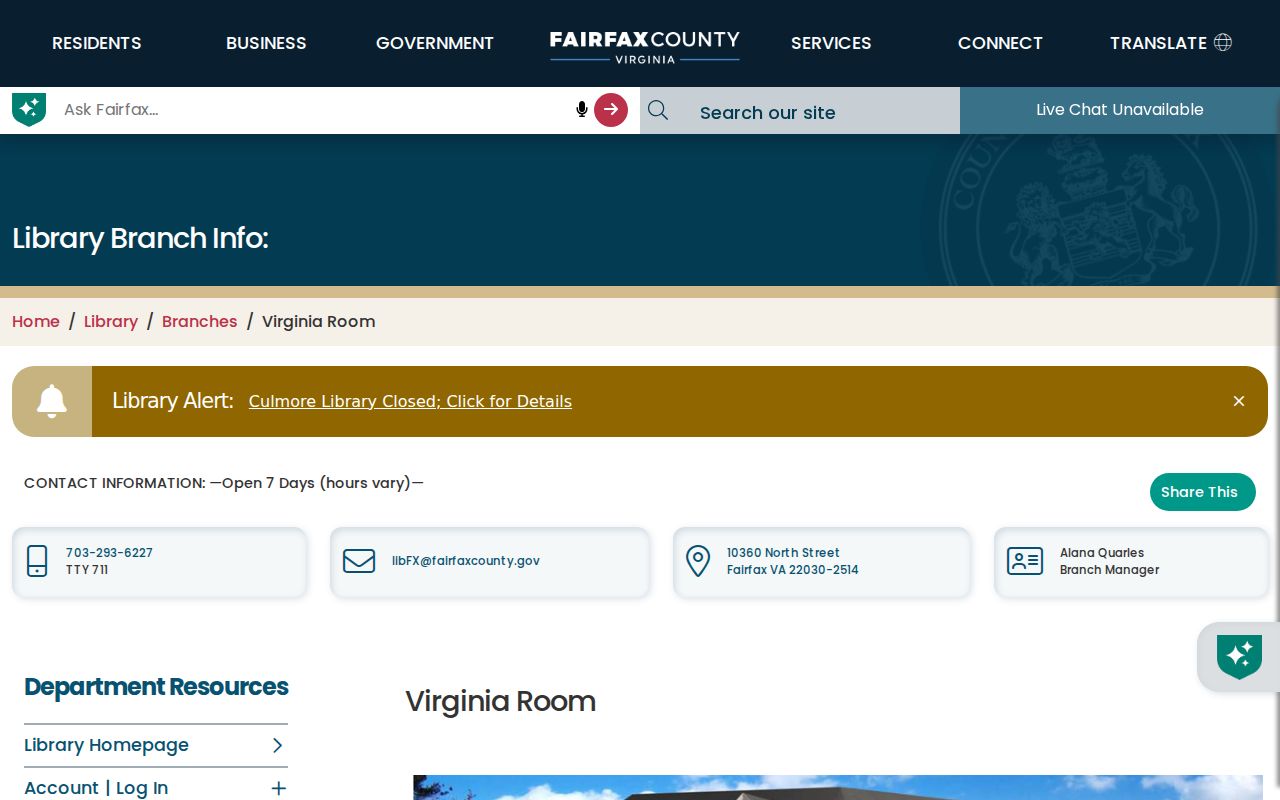
Its catalog and staff assistance are especially helpful when a Bailey's Crossroads household might appear under Falls Church, Fairfax County, or a regional directory heading.
When an online catalog points to an image collection, check the access note. The FamilySearch Fairfax catalog lead can help identify a record group and year relevant to Bailey's Crossroads, but some images may require a free account or use at an affiliate or library center. The Library of Virginia catalog is another online discovery route. Neither catalog means every historic image is available from home.
How a Bailey's Crossroads City Directory Entry Reads
A good Bailey's Crossroads transcription keeps the detail that makes an entry testable. Capture the spelling shown, including initials, the printed address, the year, the publisher, the page, the call number or image reference, and nearby entries. Some older volumes sort women under a spouse, omit a building number, or place a street under another locality. Those indexing choices matter when a Bailey's Crossroads search first comes back empty.
| Name as printed | Keep initials, spelling, and any household notation exactly as displayed. |
|---|---|
| Address | Copy the house number, street spelling, unit detail, and locality heading. |
| Edition reference | Save publisher, year, page, library call number, or image identifier. |
| Listing context | Note neighboring entries and any section label that explains how the volume is arranged. |
| Follow-up record | Match the entry to a tax map, deed, census material, newspaper, voter record, or vital record near the same date. |
- Criss-cross directory
- A reverse directory arranged by street or address rather than by surname. Ask the library whether a particular year has one.
- Householder index
- An index that identifies a household entry. It may not list every person associated with an address.
- Abbreviation key
- The volume's explanation of its short forms. Photograph or copy it before interpreting marks in entries.
Bailey's Crossroads City Directory Companions
Bailey's Crossroads historical volumes work better with records that were created for a different purpose. The Historic Records Center holds early Fairfax court records, maps, tax material, vertical files, cemetery-survey material, a reconstructed 1890 census, and Fairfax Historical Society yearbooks from 1951 through 2008. Its 1760 property-owner booklet and map, along with the 1860 tax map and key, can help bridge a modern parcel to an older name or map reference.
For Bailey's Crossroads family history, Fairfax County Public Library also has more than 300 scanned FCPS yearbooks from 36 schools, with nearly 500 physical yearbooks in the system. A yearbook can place a name in a dated school setting, but it should be checked against a near-dated address or land record. Cemetery material may link a family name to an area or historic parcel, yet a burial place alone does not establish where someone lived.
The Library of Virginia Fairfax County collection and its related Fairfax material appear in this Bailey's Crossroads historical-directory image.
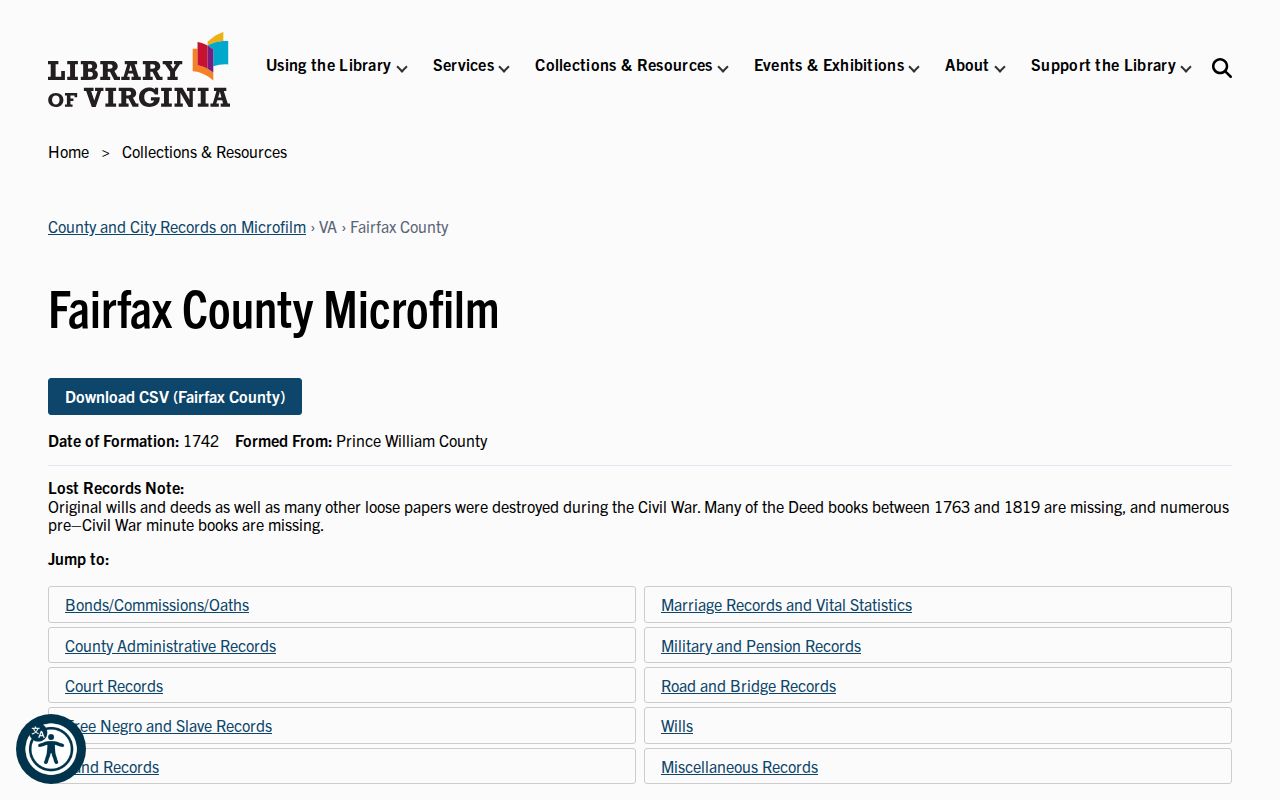
Use the image as a reminder to follow a Bailey's Crossroads directory reference into the right archive, where maps, tax books, and other dated sources can test a household connection.
Bailey's Crossroads City Directory Date Markers
Culmore offers a local timeline that can make a Bailey's Crossroads directory result easier to place. John N. Campbell purchased 118 acres in 1945, the shopping center opened in 1951, and Bailey's Elementary opened in 1952. Storefront library service followed at Culmore Shopping Center from 1961 to 1966, and a permanent library building opened in 1967. These facts do not identify a household, but they can help date a directory address, tax map, aerial image, or deed in postwar Bailey's Crossroads.
- 1945: Campbell's 118-acre purchase supplies an early development anchor.
- 1951: The Culmore shopping center opened.
- 1952: Bailey's Elementary opened.
- 1961-1966: Storefront library service operated at Culmore Shopping Center.
- 1967: A permanent library building opened.
The Culmore branch is temporarily closed for HVAC work under a county notice that gives a tentative January 2027 reopening. Bailey's Crossroads researchers should confirm current service before planning a visit. Virginia Room, other FCPL branches, and digital library resources remain useful starting routes while that status applies.
Tracing Bailey's Crossroads City Directories Across Time
Start with the exact Bailey's Crossroads surname and address as printed in one volume, then work outward by edition and by place name. Keep each finding in a source log with the title, year, page, street spelling, household detail, and the next record to check. Pair a directory entry with census material, a tax map, a deed, a newspaper item, a voter record, or a vital record dated close to the same year. That pairing is stronger than relying on a single name-and-address line.
- Locate the household in a known year and copy the entry exactly.
- Search earlier and later directory leads under Fairfax County, Falls Church, and regional headings.
- Compare each printed address with a dated tax map or deed reference.
- Check the nearest available census material, including the Historic Records Center's reconstructed 1890 material where relevant.
- Use yearbooks, newspapers, cemetery material, or probate records only as supporting dated evidence.
If the goal shifts to verifying a current name, use a separate Bailey's Crossroads resident lookup rather than treating a historical directory as a current record. The directory is a dated clue, not a present-day roll.
Bailey's Crossroads City Directory Gaps
Fairfax County formed in 1742, but the Library of Virginia warns that original wills, deeds, and loose papers were destroyed during the Civil War. Many deed books from 1763 to 1819 and pre-Civil-War minute books are missing. That loss affects Bailey's Crossroads directory follow-up because a land or family trail may stop at a missing series, even though the county's land-record span begins in 1742.
The Falls Church History Room is represented in this Bailey's Crossroads historical-directory image.
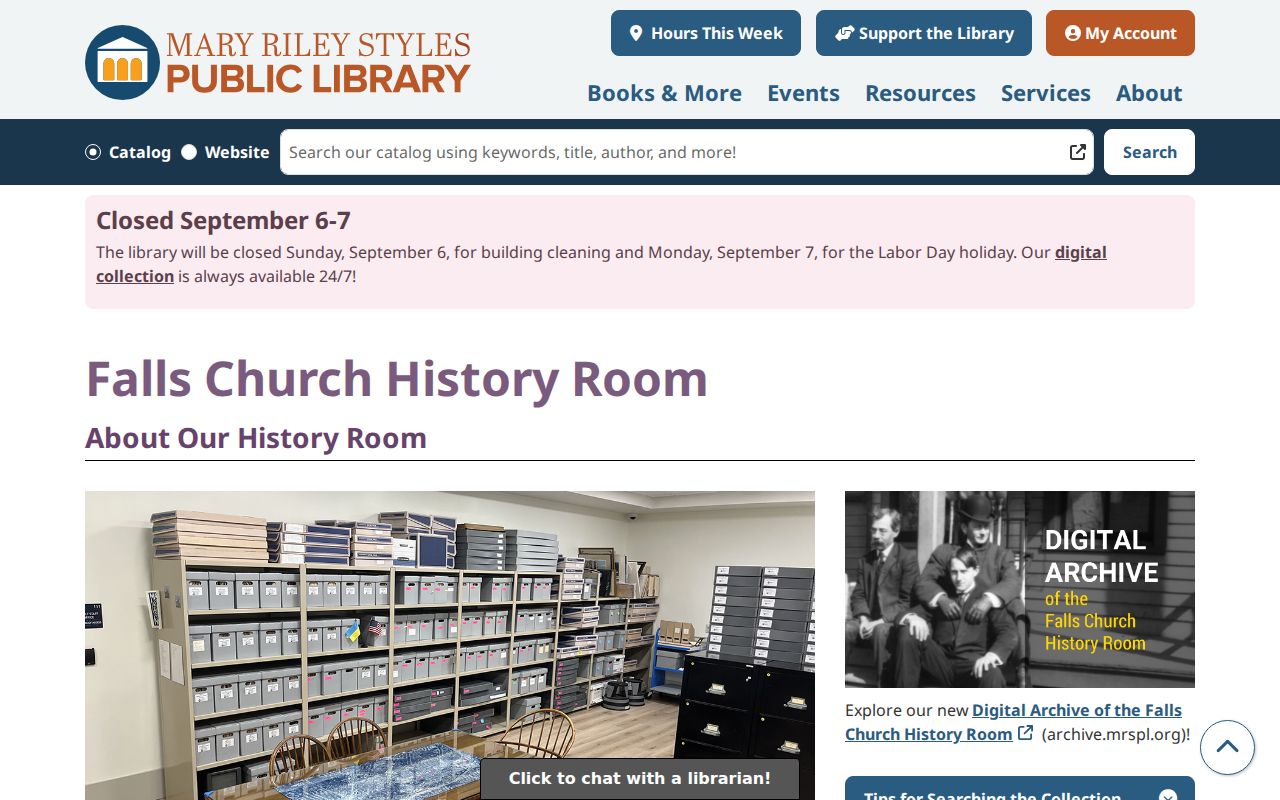
For Bailey's Crossroads, its surviving series include deed volumes, vital indexes, wills, military records, and other county material, but availability varies by record group and access location.
Use the LVA catalog, Historic Records Center, Virginia Room, and Falls Church History Room as separate routes. A VFOIA request can seek a defined existing county administrative record, but it cannot compel a private publisher's directory or make an office create a historical household list.
For an archival request, name the collection, year, and record title instead of asking for a broad family search. Virginia Room and the Historic Records Center can be reached by phone or email for collection guidance, and a focused library reproduction request may involve a research-service or image-copy charge. Confirm that charge before sending a request. Keep the response with the citation, even when no matching entry is found.
Note: A missing entry may reflect a title's coverage, a changed locality label, or an archival loss rather than a person's absence.